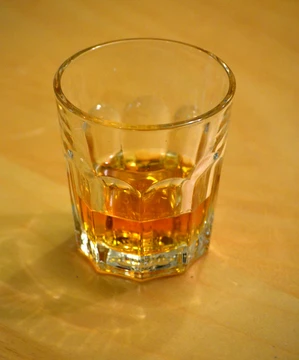
Irish whiskey
Irish whiskey is a distilled spirit from Ireland.

Irish whiskey is a distilled spirit made on the island of Ireland. Since 1990, it has experienced a resurgence and has frequently been one of the fastest-growing spirits in the world.
- number of distilleries (December 2019)
- around 35 or more
Lore & Background
Irish whiskey was one of the earliest distilled drinks in Europe, arising around the 12th century. It is sometimes speculated that Irish monks brought the technique of distilling perfumes back to Ireland from southern Europe around 1,000 AD and modified it to obtain a drinkable spirit, but the earliest reliable evidence dates to the 12th century or later. The oldest known documented record of whiskey in Ireland was in 1405, when the head of a clan died after 'taking a surfeit of aqua vitae' at Christmas.
Reader's Guide
Irish whiskey's significance lies in its historical dominance and dramatic decline, followed by a modern revival. The monopoly ended in 1987 with the launch of Cooley Distillery, the first new distillery in decades. Since 1990, Irish whiskey has been the fastest-growing spirit worldwide, with exports growing over 15% per annum. By December 2019, Ireland had 32 operating distilleries, with more planned.
Did You Know?
- The word 'whiskey' comes from the Irish uisce beatha, meaning water of life.
- The oldest known documented record of whiskey in Ireland dates from 1405.
From Monks' Perfumes to the World's Cupboard
Irish whiskey traces its roots to the twelfth century, making it one of the earliest distilled beverages in Europe. The Irish adapted this technique to produce a drinkable spirit, and the very name "whiskey" descends from the Irish uisce beatha, literally "water of life." The early product would be unrecognizable to modern drinkers: it was not aged and was commonly flavored with herbs such as mint, thyme, or anise. Pinpointing the earliest records is challenging, since production was largely unregulated, often illicit, and much Irish documentation was oral rather than written. The oldest known written mention appears in 1405 in the Annals of Clonmacnoise, recording a clan head who died after a "surfeit of aqua vitae" at Christmas.
The Long Twilight: From Global Dominance to a Single-Company Monopoly
For centuries, Irish whiskey held a position of global preeminence, at one point becoming the most popular spirit in the world. Yet a prolonged decline beginning in the late nineteenth century dealt devastating blows to the industry. The numbers tell a stark story: in the 1890s, Ireland boasted at least twenty-eight operating distilleries. Old Midleton would later be replaced by New Midleton Distillery, but the fundamental reality of a one-company monopoly over the entire Irish whiskey industry stood. This was not merely a commercial contraction; it represented the near-extinction of a craft tradition that had sustained communities, defined a national identity, and supplied the world's drinking tables for over seven hundred years. The industry's survival during those decades depended on the stubborn persistence of a handful of distilleries holding the flame against an almost total collapse of production capacity.
Breaking the Monopoly and Reclaiming the World
The monopoly that had strangled Irish whiskey for decades was shattered in 1987 with the launch of Cooley Distillery, the first new distillery in the country in decades. Notably, this venture was academically conceived, signaling a deliberate, knowledge-driven approach to reviving the industry. The effect was transformative. From 1990 onward, Irish whiskey has been the fastest-growing spirit in the world every single year. Exports have grown by more than fifteen percent per annum, a pace that has prompted both the expansion of existing distilleries and the construction of entirely new ones. By December 2019, Ireland counted thirty-two distilleries in operation, with additional facilities either planned or under active development. The resurgence has not merely been about volume; it has restored a sense of competitive vitality and creative diversity to an industry that had been reduced to a single corporate voice. The world's palates, it seems, had simply been waiting for the full breadth of Irish whiskey to return.
Licences, Taxes, and the Poitín Underworld
The formal regulation of Irish whiskey production is a story of slow and ineffective state intervention. Today, many legal varieties of Poitín have reached the market, bridging the illicit past and the regulated present.
Common Misconceptions (Editorial)
Some people mistakenly believe that Irish whiskey originated only in the modern era, but it was one of the earliest distilled drinks in Europe, arising around the 12th century. Others assume the word "whiskey" is of Scottish origin, but it actually comes from the Irish *uisce beatha*, meaning "water of life."
Why It Matters (Editorial)
Irish whiskey matters because it embodies a remarkable cultural and economic revival, having transformed from near obscurity in the late 20th century to one of the world’s fastest-growing spirits. Its centuries-long heritage also offers a tangible link to Ireland’s medieval past, reminding us that even simple pleasures can carry deep historical roots.
Frequently Asked Questions
Who is Irish whiskey?
Irish whiskey is a category of distilled spirit produced across the island of Ireland. In the World of Whisky, it occupies the role of a storied elder whose influence once shaped the entire global spirits landscape.
What is Irish whiskey's signature trait?
Its defining characteristic is a smooth, approachable character that historically set it apart from its Scottish and American siblings. This quality helped it become the world's most beloved spirit before its long fall from grace.
How many distilleries does Irish whiskey have now?
By December 2019, the count had climbed back to roughly 35 or more active distilleries across Ireland. This marks a stunning recovery from the rock-bottom of just two survivors in the mid-1960s.
Why does Irish whiskey matter in the World of Whisky?
Its arc from global supremacy to near-disappearance and then explosive regrowth since 1990 makes it one of the most dramatic stories in the entire spirit canon. It consistently ranks among the fastest-growing categories, proving that a true legend can return.
More in World of Whisky 1-20
Spotted an error? Know more?
This is a living reference — every entry is fact-audited, and reader corrections feed straight into our audit queue. Suggest an edit · See this site's audit record