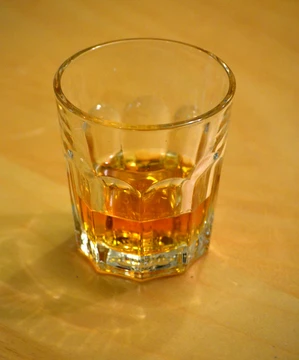
Scotch whisky
Scotch whisky is whisky made and aged in Scotland.

Scotch whisky is malt whisky or grain whisky (or a blend of the two) made in Scotland.
- field
- Distilled spirits
- nationality
- Scottish
- known_for
- Geographical indication, aged in oak for at least three years, five distinct categories
- minimum_bottling_strength
- 40% alcohol by volume
- minimum_aging
- 3 years in oak barrels
Lore & Background
The term aqua vitae is Latin for 'water of life' and was the general term for distilled spirits. Between the 1760s and 1830s, a substantial unlicensed trade originated from the Highlands. The introduction of the column still in 1831, patented by Aeneas Coffey, allowed continuous distillation and increased production. A shortage of wine and brandy in France due to phylloxera by 1880 led to a surge in demand for whisky. By the 1890s, almost forty new distilleries had opened. A boom in the 1970s led to overproduction in the early 1980s, causing many distilleries to close. Since the 2010s, Scotch whisky has entered a new phase of growth with new and reopened distilleries.
Reader's Guide
Scotch whisky's significance lies in its strict legal definition and global recognition. The Scotch Whisky Regulations 2009 define it as whisky produced at a distillery in Scotland from water and malted barley, distilled at less than 94.8% alcohol by volume, and matured in oak casks in Scotland for at least three years. It is divided into five categories: single malt, single grain, blended malt, blended grain, and blended Scotch whisky. Age statements must reflect the youngest whisky in the bottle; no age statement whisky guarantees at least three years of aging. The minimum bottling strength is 40% alcohol by volume. Historically, taxation and illicit distilling shaped the industry, with the Excise Act of 1823 ushering in the modern era. The column still revolutionized production, and phylloxera in France boosted demand. The industry survived wars, prohibition, and depression, and has seen revival since the 2010s.
Did You Know?
- All Scotch whisky must be aged in oak barrels for at least three years.
- The word whisky comes from the Gaelic uisge beatha or usquebaugh, meaning 'water of life'.
Origins: From Royal Malt to 'Water of Life'
The story of Scotch whisky begins in the ledgers of the Scottish crown. A decade later, Aberdeen's council registers listed among the possessions of a deceased chaplain, Sir Andrew Gray, a still described in Middle Scots as being used for 'aquavite and ros wattir.' The very word we use today, whisky, descends from the Scottish Gaelic uisge beatha, a direct calque of that same Medieval Latin aqua vitae. The spirit was not merely a drink; it served practical industrial purposes, including moistening the slurry of saltpetre, charcoal, and sulphur used in gunpowder manufacture. King James IV of Scotland was noted as a particular admirer of the beverage.
The Illicit Century and the Road to Legality
For nearly two centuries, taxation shaped the fate of Scottish spirit-making. Local magistrates, drawn from the landowning class, turned a blind eye, understanding that imprisoning tenant distillers would destroy the rents they collected. The Excise Act of 1823 changed everything, tightening enforcement against illegal stills while easing restrictions on licensed operations.
Industrial Revolution and the Global Surge
Two converging forces in the nineteenth century transformed Scotch from a regional product into a global phenomenon. In 1831, Aeneas Coffey patented a refined column still, building on a design originally created by Robert Stein, which itself drew on early innovations by Anthony Perrier. Unlike traditional pot stills requiring cleaning between batches, the column still enabled continuous distillation, performing the equivalent of multiple distillation steps in a single pass. The result was dramatically higher output at lower cost, and a whisky that was smoother and less intense — qualities that broadened its appeal. Then came an external shock: by 1880, the phylloxera insect had devastated French vineyards, creating a severe shortage of wine and brandy. European consumers turned to Scotch in large numbers. By the 1890s, nearly forty new distilleries had opened across Scotland. The industry's speculative energy was exemplified by Edinburgh blenders Pattisons Ltd., which rose to prominence before collapsing spectacularly. In the aftermath, The Distillers Company absorbed competitors' assets.
Classification, Regulation, and Modern Identity
The spirit is governed by strict rules: it must be aged in oak barrels for a minimum of three years immediately after distillation, and it cannot be bottled below 40 percent alcohol by volume. When a bottle carries a numerical age statement, that figure must reflect the youngest whisky in the blend — a product known as guaranteed-age whisky. Bottles without such a statement, called no-age-statement or NAS whisky, carry only the assurance that every drop inside is at least three years old. The category system divides Scotch into five types: single malt, single grain, blended malt (once called vatted malt or pure malt), blended grain, and blended Scotch. The naming itself preserves a medieval heritage; the Gaelic uisge beatha and the Scots pronunciations of whisky or whusk(e)y all echo the original 'water of life.' And in the social ritual of consumption, many drinkers still measure their pour in a dram, a small unit carrying the weight of centuries of tradition.
Common Misconceptions (Editorial)
Some people think Scotch whisky can be made from any grain, but it is specifically malt whisky or grain whisky (or a blend of the two). Others assume the minimum aging period is longer or shorter than it actually is, but all Scotch whisky must be aged in oak barrels for at least three years. The word whisky is also sometimes mistakenly thought to be purely Scottish in origin, but it actually comes from the Gaelic uisge beatha or usquebaugh, meaning “water of life.”
Why It Matters (Editorial)
Scotch whisky endures as a global benchmark of quality because its production is tightly regulated by law—from geographic origin to minimum aging—which protects its distinctive character and reputation. Its story also mirrors Scottish economic history, surviving illicit trade, technological revolutions, and boom-and-bust cycles, while continuing to evolve with new distilleries opening today.
Frequently Asked Questions
Who is Scotch whisky?
Scotch whisky is a distilled spirit produced exclusively in Scotland, taking the form of malt whisky, grain whisky, or a blend of the two. It carries protected geographical-indication status, so the name can only be applied to spirits made within Scottish borders.
What are Scotch whisky's powers/role?
Its defining trait is the mandatory minimum of three years maturing in oak casks, which builds the layered flavors fans chase. It also operates under five distinct category rules that dictate how each style is produced, labeled, and recognized.
How does Scotch whisky's story end?
There is no final chapter—Scotch whisky is a living, continuously produced spirit rather than a single narrative with a conclusion. Every new cask filled at a Scottish distillery simply opens the next entry in a tradition stretching back centuries.
What are Scotch whisky's key stats?
Any bottle sold as Scotch must contain at least 40 percent alcohol by volume and have spent a minimum of three years aging in oak barrels. These two thresholds, paired with the five-category framework, form the baseline specification every fan recognizes.
More in World of Whisky 1-20
Spotted an error? Know more?
This is a living reference — every entry is fact-audited, and reader corrections feed straight into our audit queue. Suggest an edit · See this site's audit record