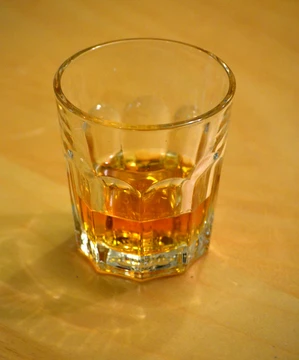
Johnnie Walker
World's highest selling Scotch whisky since 1820.

Johnnie Walker is a brand of Scotch whisky produced by Diageo in Scotland, established in the Scottish burgh of Kilmarnock in 1820 by grocer John Walker. It is the world's highest selling Scotch whisky, with reported annual sales of 20.3 million cases in 2025, and its history spans over two centuries of blending innovation and global expansion.
- born
- John Walker born 25 July 1805
- died
- John Walker died 1857
- field
- Scotch whisky production and blending
- nationality
- Scottish
- known_for
- World's highest selling Scotch whisky; signature square bottle and 24-degree ang
Verified Timeline
Lore & Background
John Walker, a native of Kilmarnock, began managing a grocery, wine, and spirits shop as a teenager in 1820 after his father died. A teetotaller, he initially sold rum, brandy, gin, and whisky, but soon focused on whisky, blending malt and grain whiskies to order. He later used his name on labels, selling a blended malt as Walker's Kilmarnock Whisky. After his death in 1857, his son Alexander 'Alec' Walker and grandson Alexander Walker II were largely responsible for establishing the whisky as a favoured brand. Alec introduced the square bottle in 1860 and the angled label, and created the first commercial blend, Old Highland Whisky, in 1865, registered in 1867. The arrival of a railway in Kilmarnock helped sales reach 100,000 gallons per year by 1862.
Reader's Guide
Johnnie Walker's significance lies in its transformation from a small grocery shop into the world's best-selling Scotch whisky, driven by the blending innovations of the Walker family. The brand pioneered the square bottle and distinctive 24-degree label, enhancing visibility and shipping efficiency. Its expansion through acquisitions of distilleries like Cardhu, Coleburn, Clynelish, and Mortlach ensured a steady supply of single malts for its blends. The closure of the Kilmarnock plant in 2012 ended a 190-year association with the town, but the brand continued with a flagship visitor experience in Edinburgh and environmental initiatives like a paper bottle. Johnnie Walker's legacy includes iconic blends such as Red Label, Black Label, and Green Label, and its global reach has made it a symbol of Scotch whisky worldwide.
Did You Know?
- John Walker was a teetotaller, yet he built a business selling spirits including rum, brandy, gin, and whisky.
- The brand's square bottle was introduced in 1860 to fit more bottles in the same space and reduce breakage.
- The label has been applied at a 24-degree angle since 1860, making the text larger and more visible from a distance.
- The Striding Man mascot was created by cartoonist Tom Browne in 1909.
- The Hill Street plant in Kilmarnock was once the world's largest bottling plant before its closure in 2012.
Humble Beginnings in a Scottish Burgh
John Walker was born on 25 July 1805 in Kilmarnock, Ayrshire. When his farmer father died in 1819, the family sold their farm and the trustees invested the £417 proceeds in an Italian warehouse, grocery, and wine-and-spirits shop on the High Street. As a teenager, Walker managed the grocery, wine, and spirits side of the business in 1820. The Excise Act of 1823 dramatically reduced the crushing taxes on whisky distillation and sale, opening new commercial possibilities. By 1825, Walker—despite being a teetotaller—was dealing in rum, brandy, gin, and whisky. Because the law still prohibited blending grain whiskies with malt whiskies, he sold both types as made-to-order blends tailored to individual customer preferences, without any proprietary brand name. It was only years later that he began putting his own name on labels, marketing a blended malt as Walker's Kilmarnock Whisky. He passed away in 1857, leaving behind a modest but promising spirits operation.
The Sons Who Built a Whisky Empire
After John Walker's death in 1857, his son Alexander "Alec" Walker and grandson Alexander Walker II transformed the family's modest spirits trade into a dominant whisky brand. The Spirits Act of 1860 legalised the blending of grain and malt whiskies, ushering in the modern era of blended Scotch. Alec seized this opportunity, and by 1862 annual sales of Walker's Kilmarnock had surged to 100,000 gallons. His business acumen was amplified by the arrival of a railway in Kilmarnock, which carried goods to merchant ships bound for markets around the world. In 1860, Alec also introduced the brand's signature square bottle, which allowed more bottles to fit in the same storage space and reduced breakage. The distinctive label, applied at a 24-degree upward angle from left to right, made the text larger and more visible, enabling consumers to recognise the bottle from a distance. In 1865, Alec created the brand's first commercial blend, Old Highland Whisky, registered in 1867. Under John Walker, whisky had represented just eight percent of firm income; by the time Alexander was ready to hand the company to his sons, that figure had climbed to between 90 and 95 percent.
Distilleries, Coloured Labels, and the Striding Man
The Walkers' strategy of securing single-malt supply was aggressive and far-reaching. In 1893 they purchased Cardhu distillery, removing its single malt from the open market and making it the exclusive heart of their blends. From 1906 to 1909, John's grandsons George and Alexander II expanded the range to three blended whiskies distinguished only by label colour: white (Old Highland, 5 years), red (Special Old Highland, 9 years), and black (Extra Special Old Highland, 12 years). In 1909, a major rebranding introduced the Striding Man mascot, created by cartoonist Tom Browne, and the blends were renamed to match their common colour names: White Label at 6 years, Red Label at 10 years, and Black Label at 12 years. The family continued acquiring distilleries—Coleburn in 1915, Clynelish and Dailuaine-Talisker in 1916, and Mortlach in 1923—ensuring vast volumes of single malt fed the blends. The company joined Distillers Company in 1925; Distillers was later acquired by Guinness in 1986, and Guinness merged with Grand Metropolitan to form Diageo in 1997, the same year Johnnie Walker Pure Malt (renamed Green Label in 2004) was introduced.
Global Dominance and the End of a Kilmarnock Era
Johnnie Walker stands as the world's highest-selling Scotch whisky, with reported annual sales of 20.3 million cases—equivalent to roughly 182.7 million litres—in 2025. For nearly two centuries, the brand's production was inseparable from Kilmarnock. The Hill Street plant in that Scottish burgh served as the brand's bottling home and was once the world's largest bottling facility. In July 2009, Diageo announced it would close all Kilmarnock operations by 2012, transferring production to its site in Leven. The decision sparked fierce backlash from local residents, politicians, and then-First Minister of Scotland Alex Salmond. Petitions, public campaigns, and a large-scale march around Kilmarnock failed to sway the company, and Diageo proceeded with the closure. The shutdown brought to an end a 190-year association between the brand and the town where a teenage grocer had first managed a wine-and-spirits shop on the High Street in 1820.
Common Misconceptions (Editorial)
1. Some assume Johnnie Walker’s founder John Walker was a whisky distiller or drinker, but the facts show he was a grocer and a teetotaller. 2. Many believe the brand’s square bottle and angled label were modern marketing inventions, but they were both introduced by his son Alexander in 1860.
Why It Matters (Editorial)
Johnnie Walker’s endurance over two centuries reflects how a family’s blend of innovation—from breakage-reducing bottles to eye-catching labels—turned a local grocer’s side business into a global icon. Its story also illustrates the tension in Scottish whisky culture: a teetotaller built the world’s best-selling Scotch, proving that business acumen and craftsmanship can outlast even personal abstinence.
Frequently Asked Questions
Who is Johnnie Walker?
Johnnie Walker is a Scotch whisky brand whose roots go back to a grocer named John Walker, who started blending in the Scottish town of Kilmarnock in 1820. Today the brand is owned by Diageo and holds the title of the best-selling Scotch whisky worldwide.
What is the Striding Man and why does it matter?
The Striding Man is the iconic walking-figure logo that has served as the brand's visual identity for generations. It appears on every bottle label and has become one of the most instantly recognizable symbols in the whisky world.
What makes Johnnie Walker's bottle design so distinctive?
The brand is immediately identifiable by its square-shaped bottle and its label set at a 24-degree angle. That particular combination of geometry and tilt has made it one of the most recognizable silhouettes on any liquor shelf.
How much does Johnnie Walker sell each year?
As of 2025 the brand reports roughly 20.3 million cases sold annually, keeping it firmly in the top spot among Scotch whiskies. That volume reflects more than two centuries of continuous blending and global distribution.
Who was the original John Walker the brand is named after?
The founder, John Walker, was born on 25 July 1805 and died in 1857. He was a Scottish grocer in Kilmarnock whose early blending experiments laid the groundwork for what would grow into a worldwide whisky empire.
More in World of Whisky 1-20
Spotted an error? Know more?
This is a living reference — every entry is fact-audited, and reader corrections feed straight into our audit queue. Suggest an edit · See this site's audit record