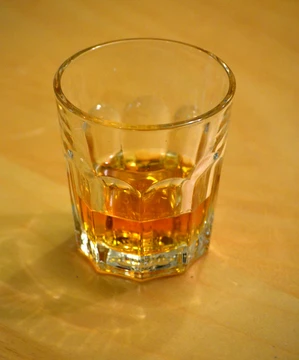
Single malt
Malt whisky from a single distillery, aged in oak casks.

Single malt whisky is malt whisky produced at a single distillery. While typically associated with Scotch whisky, single malts are also produced in various other countries, each with its own regulatory definitions.
- type
- Alcoholic beverage
- category
- Whisky
- primary_ingredient
- Malted barley
- minimum_aging
- 3 years (Scotch, English, Danish)
- typical_abv
- 40–50% (bottling strength)
- production_method
- Batch distillation (pot stills required in Scotland)
Lore & Background
Single malt whisky is defined by its origin: it must be the product of a single distillery. In Scotland, the Scotch Whisky Regulations require it to be made exclusively from malted barley, distilled in pot stills, and aged for at least three years in oak casks of no more than 700 litres. Other countries largely follow the Scotch model, though permitted practices vary. For example, the United States allows the use of caramel coloring if disclosed on the label, and defines American single malt as distilled from 100% malted barley grown in the U.S., aged in oak barrels of up to 700 liters, and bottled at not less than 80° proof. Production involves malting barley by soaking it in water to germinate, then drying it—often with peat smoke to add smoky phenols. The malt is milled into grist, mashed with hot water to extract sugars, and fermented with yeast to produce a wash of 5–7% alcohol. The wash is distilled twice (or more) in pot stills, yielding new-make spirit at 60–70% ABV, which is then diluted and aged in oak casks. During maturation, a portion evaporates as the 'angel's share.'
Reader's Guide
Single malt whisky holds significance as a benchmark of quality and tradition in whisky production. Its definition—whisky from a single distillery—distinguishes it from blended whiskies, emphasizing the unique character imparted by a specific distillery's methods, water source, and cask selection. The Scotch model has influenced regulations worldwide, with countries like the United States, England, Wales, and Denmark establishing their own standards for single malt. These regulations ensure consistency and authenticity, though they allow for variations such as permitted distillation methods or the use of caramel coloring. The legacy of single malt lies in its craftsmanship: from malting and mashing to fermentation, distillation, and long maturation in oak casks. The process allows for a wide range of flavors, from heavily peated Islay malts to unpeated varieties. Single-barrel bottlings offer insight into the influence of different cask types, while vatted batches achieve consistent flavor profiles. As a category, single malt continues to evolve, with new geographical indications and manifestos defining production in emerging whisky regions.
Did You Know?
- Single malt whisky must be made at a single distillery, but it can be a vatting of multiple casks from that distillery.
- Scottish regulations require single malt Scotch to be distilled in pot stills, while other jurisdictions may permit column stills.
- The 'angel's share' refers to the portion of whisky that evaporates from the cask during maturation.
- American single malt regulations allow the use of caramel coloring only if it is disclosed on the product label.
Defining Standards Across Nations
Single malt whisky, at its core, is malt whisky produced at one distillery, yet the precise rules governing what earns that label vary meaningfully from country to country. In Scotland, the Scotch Whisky Regulations demand that the spirit be made solely from malted barley, distilled in pot stills at a single site, and matured for a minimum of three years in oak casks no larger than 700 litres, with E150A caramel colouring as the only permitted addition. England's emerging geographical indication adds the requirement that barley be UK-grown and water be English, with distillation below 94.8 percent ABV and a 40 percent minimum bottling strength.
The Art of Malting
The transformation of raw barley into malt is where single malt whisky truly begins. Grains are soaked in water for two to three days, triggering germination and releasing the enzymes that will later convert stubborn, water-insoluble starch into sugars yeast can actually ferment. In traditional Scottish practice, the germinating seeds were spread across a malting floor and turned by hand over three to five days until the right amount of starch had been converted. Germination was then arrested by blasting the seeds with hot air. Many distilleries once relied on a kiln for this drying stage, and the distinctive pagoda-shaped roof that ventilated those kilns still crowns buildings across Scotland and beyond, though most are now purely decorative. Today, the majority of distilleries outsource their malting to commercial maltsters. During drying, peat smoke is often drawn through the grain, depositing phenols that give the finished whisky its characteristic smoky nose and flavour. Heavily peated Islay malts can carry phenol levels of 25 to 50 parts per million, while gentler expressions sit around 2 to 3 ppm. The Glengoyne Distillery stands apart, using only hot air to dry its barley and producing entirely unpeated malt.
Mashing and the Birth of Wort
Once malted, the barley is milled into a coarse mixture called grist, composed roughly of 20 percent husks, 70 percent grits, and 10 percent fine flour. This grist is loaded into a large stainless-steel vessel known as a mash tun, where three successive additions of hot water coax out the fermentable sugars. The first water, introduced at around 60 degrees Celsius, dissolves the maltose and the enzyme diastase already present in the grain. The diastase then continues the work begun during malting, breaking down any remaining starch into additional sugar. A second water course at roughly 72 degrees Celsius and a third at about 88 degrees Celsius ensure that virtually all extractable sugars are recovered. The resulting sweet liquid, called wort, from the first two water courses is drained into washback vessels for the next stage of production. In essence, mashing is the bridge between the solid, starchy grain and the liquid, sugar-rich substrate that fermentation will ultimately transform into alcohol. The entire process is a batch operation, repeated cycle after cycle in every single malt distillery around the world.
Bottling Philosophies: Single Barrel versus Vatted
Although every single malt shares the same fundamental recipe of barley, yeast, and water, the way a distillery chooses to bottle its spirit creates two very different drinking experiences. The most common approach is vatting, or marrying, in which several batches are blended together at bottling time to achieve a consistent house flavour from one release to the next. This ensures that a consumer who enjoys a particular expression will find the same profile in the next bottle they open. At the other end of the spectrum sit single-barrel single malts, where an entire batch has been stored for three or more years in one specific oak barrel. These releases let the drinker taste the unmistakable fingerprint of that particular cask, whether it was a first-use bourbon whiskey barrel, a port pipe, or some other type of wood. Because only one barrel's worth is available, single-barrel bottlings are inherently limited and offer a rare window into how the storage medium shapes the character of the same whisky. Both approaches remain batch productions, and both honour the single-distillery origin that defines the category.
Common Misconceptions (Editorial)
A common misconception is that single malt whisky must come from a single cask. In fact, it can be a vatting of multiple casks from the same distillery. Another mistaken belief is that all single malt whisky must be distilled in pot stills; while this is required for Scotch, other jurisdictions may permit column stills.
Why It Matters (Editorial)
The endurance of single malt whisky reflects a deep appreciation for craftsmanship and place. Each bottle captures the character of a single distillery and its environment, from the barley to the aging climate, making it a benchmark of authenticity in an increasingly homogenized spirits market.
Frequently Asked Questions
Who is Single malt?
Single malt is a whisky made entirely at one distillery from malted barley, with no blending of spirits from other sources. It represents the purest, unadulterated expression of a single production site, aged in oak casks before release.
What are Single malt's powers/role?
Its defining strength is batch distillation in pot stills, which locks a unique flavor fingerprint to one location and team. In Scotland this method is legally mandatory, and the spirit must mature in oak for at least three years before it may carry the name.
How does Single malt's story end?
The arc concludes at bottling, usually at 40–50% ABV, once the distillery judges the cask to have reached its target character. There is no fixed final chapter—some expressions see decades of aging while others are released right at the three-year minimum.
Why is Single malt important?
It acts as the benchmark for judging a distillery's craftsmanship because no secondary spirit can mask or dilute its profile. Enthusiasts use it as a direct, unfiltered window into a specific place, process, and set of hands.
Where does Single malt come from?
Although most tightly linked to Scotland, single malts are produced in Ireland, Japan, the United States, Denmark, and many other regions, each applying its own regulatory definition. The shared thread across all of them is one distillery, malted barley, and oak-cask maturation.
More in World of Whisky 1-20
Spotted an error? Know more?
This is a living reference — every entry is fact-audited, and reader corrections feed straight into our audit queue. Suggest an edit · See this site's audit record