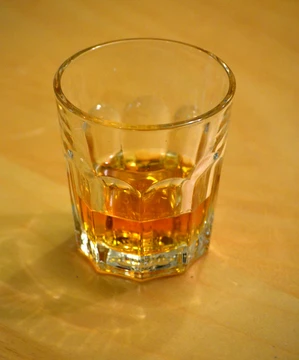
The angels' share
Evaporative loss of alcohol and water from aging barrels.

The angels' share is the portion of wine or distilled spirits lost to evaporation during barrel aging. As a barrel lets in small amounts of oxygen, water or alcohol evaporates, and this loss is known by the traditional term 'angels' share.' The term is used in the context of maturing beverages such as wine, cognac, armagnac, sherry, port, whiskey, beer, arrack, and sake.
- field
- Beverage aging and cooperage
- known_for
- Evaporative loss of alcohol and water from wooden barrels during maturation
- related_beverages
- Wine, cognac, armagnac, sherry, port, whiskey, beer, arrack, sake
- key_factor
- Oxygen enters a barrel when water or alcohol is lost due to evaporation
Lore & Background
The angels' share occurs when a wine or spirit ages in a barrel, as small amounts of oxygen are introduced through the wood. Oxygen enters a barrel when water or alcohol is lost due to evaporation, a portion known as the 'angels' share.' In an environment with 100% relative humidity, very little water evaporates and so most of the loss is alcohol, a useful trick if one has a wine with very high proof. Most beverages are topped up from other barrels to prevent significant oxidation, although others such as vin jaune and sherry are not.
Reader's Guide
The concept of the angels' share is significant in the production of aged beverages, as it represents both a loss of volume and a means of introducing oxygen that influences flavor. The evaporation rate depends on humidity: in high humidity, more alcohol than water evaporates, which can be used to reduce alcohol content. The term is traditional and reflects the historical practice of barrel aging, which dates back at least to Roman times when wooden pithoi (barrels) were lined with pitch to stop leakage and preserve wine. Today, barrels are made of various oaks, including English oak, white oak, American white oak, mizunara oak, and Oregon oak. The angels' share is a natural consequence of the porous nature of wood, which allows for micro-oxygenation and the development of compounds such as vanillin and wood tannins. The loss is accepted as part of the aging process, and the term has become a romanticized part of beverage lore.
Did You Know?
- Oxygen enters a barrel when water or alcohol is lost due to evaporation, a portion known as the 'angels' share.'
- In an environment with 100% relative humidity, very little water evaporates and so most of the loss is alcohol.
- Most beverages are topped up from other barrels to prevent significant oxidation, although others such as vin jaune and sherry are not.
- Beverages aged in wooden barrels take on compounds such as vanillin and wood tannins.
Common Misconceptions (Editorial)
- A common misconception is that the angels' share only refers to alcohol evaporation. In fact, the term covers the loss of both water and alcohol during barrel aging, as both can evaporate depending on environmental conditions. - Another misconception is that all barrels are topped up to prevent loss. While most beverages are topped up from other barrels to avoid significant oxidation, some like vin jaune and sherry are intentionally left untapped.
Why It Matters (Editorial)
The angels' share is a poetic reminder that even the most carefully crafted products are subject to natural forces beyond human control. Understanding this evaporation process matters not only for its romantic appeal but also for the practical impact on flavor concentration, proof, and the final character of aged spirits and wines—linking craftsmanship directly to chemistry and climate.
Frequently Asked Questions
What is The angels' share in whisky?
The angels' share is the traditional name for the alcohol and water that evaporate out of a wooden barrel while spirits are maturing. It represents the unavoidable volume loss a cask suffers over time in the warehouse.
How does The angels' share actually work?
As water and alcohol molecules escape through the porous staves of the barrel, small amounts of oxygen simultaneously seep in to replace them. This constant exchange of evaporation and oxidation is the engine behind the maturation process.
Which beverages are subject to The angels' share?
The term applies to any drink aged in wooden casks, including wine, cognac, armagnac, sherry, port, whiskey, beer, arrack, and sake. It is a concept rooted in the broader fields of beverage aging and cooperage rather than whisky alone.
Why is The angels' share important to whisky production?
It is both a financial cost, since distilleries lose measurable volume every year in the warehouse, and a functional necessity, because the oxygen that enters alongside the evaporative loss helps drive flavor development. Without this slow exchange, the spirit would never fully mature.
Does The angels' share affect every barrel the same way?
The rate of evaporative loss varies with environmental conditions such as humidity and temperature, so casks in different climates or warehouse positions will shed volume at different speeds. This variability is one reason the term is tied to the wider science of cooperage and barrel management.
More in World of Whisky 1-20
Spotted an error? Know more?
This is a living reference — every entry is fact-audited, and reader corrections feed straight into our audit queue. Suggest an edit · See this site's audit record